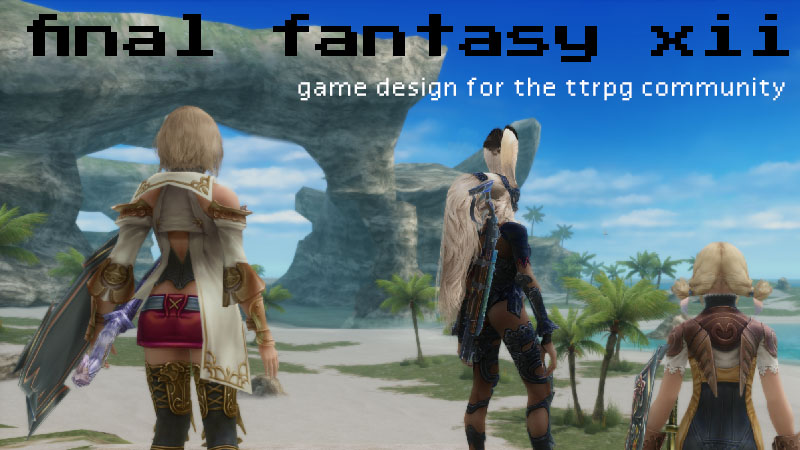
I’ve been playing my way through Final Fantasy and other Japanese roleplaying games, and I have many thoughts on how their design translates to the tabletop medium. Earlier this year, I was inspired to write about Final Fantasy Tactics; after finishing Final Fantasy XII, I have decided to turn this into a series of posts. My goal with these posts is to establish a beachhead of ideas rather than a comprehensive review or gameable content. I find it is helpful to reframe a wide variety of ideas through a tabletop lens regardless of whether any individual mechanic is ultimately brought to the table.
final fantasy xii: broad context
Final Fantasy XII is a game about politics. In comparison to every other Final Fantasy, there is no world ending threat. The most common criticism of the game is that the player avatar / “protagonist” doesn’t have anything to do with the plot. The game is about as far as you can get away from the chosen hero framework while still being in the same genre.
The game’s central conflict is about the threat of empire: it is set in the shadow of one war and the growing tension that there will be another. A ragtag group of misfits thrown together by fate are put into a position where they have the opportunity to either escalate the conflict through weapons of mass destruction or reject that level of violence. Over the course of the game, they learn to let go of their desire for nation-wide vengeance, and instead do the sensible thing: killing the emperor and his judges.
There are six core party members:
- Vaan, a street thief with dreams of being a sky pirate
- Penelo, his best friend and ride-or-die
- Balthier, a veteran sky pirate
- Fran, his best friend and ride-or-die
- Ashe, rebel princess-in-exile of Dalmasca
- Basch, loyal soldier of Dalmasca framed for regicide by his evil twin brother
I could write buckets about why I love the themes of this story, about legacy, and the power individuals have to break cycles of abuse and oppose imperialism. The important thing is that you have some context for the major mechanics of the game.
gambits
Unlike most Final Fantasy games, FFXII combat takes place in the open world. There is no separate battle screen that the party moves to when they encounter an enemy; this also means that enemies can join or leave battles in progress and that you can (usually) run away at will. To support this framework, FFXII uses the Active Dimension Battle system — a direct evolution of the Active Time Battle system. Essentially, combat participants take actions when Ready; certain actions take longer before they are Ready to execute. This is affected by a combatant’s individual speed, leading to an initiative order that changes on a per-action basis.
Aside from the open world, this is very similar to how many Final Fantasy games operate. The big experiment of Final Fantasy XII is the gambit system.
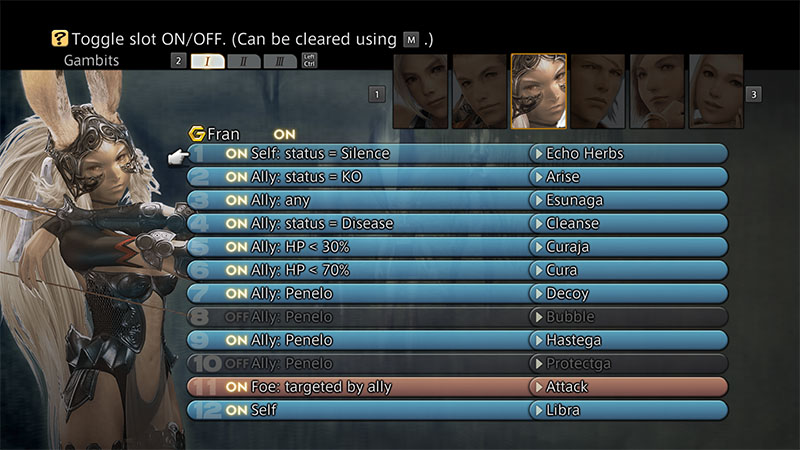
Gambits are a diegetic, in-universe artifact. Similar to how you can purchase magick spells or skill technicks from shops, you can purchase “gambits” — bite-sized tactics to integrate into your party’s strategy. An individual gambit takes the form of a condition, such as “Foe: Highest Magick Power” or “Self: item AMT >= 10”. These are arranged into a priority list for individual characters. You start out with a limited amount of gambit slots and unlock a maximum of 12 over the course of the game.
The gambit system essentially allows you to program your own behaviors for your party, so that when a battle happens, the game is able to automatically take action. This massively decreases the cognitive load from running around an open world filled with monsters.
A common criticism of the game is that the gambit system means that it “plays itself”. This simply isn’t true, for a couple reasons:
First, this is rocket building gameplay. The play is in setting up a party and watching how it performs (or doesn’t) and making improvements over time. I could understand the argument if this were an action game where execution skill was a factor in the reproducibility of a specific strategy, but gambits simply allow you to offload the repetition of telling your fighters to attack and healers to heal for every monster that crosses your path.
Second, your gambits are being changed constantly based on circumstance and enemy. When I’m exploring a dungeon, I turn on a gambit to constantly cast the Float spell on my party so that I avoid floor traps. When I’m deep in an endgame area, I have gambits to buff my party and higher healing thresholds. I turn those off to conserve MP when I’m running through early game areas or low on resources. Many fights have changing conditions; sometimes the boss will become immune to all magick damage or the arena will prevent the use of items. I constantly alter and change the gambit setup mid-combat so that the party isn’t stuck or ineffective.
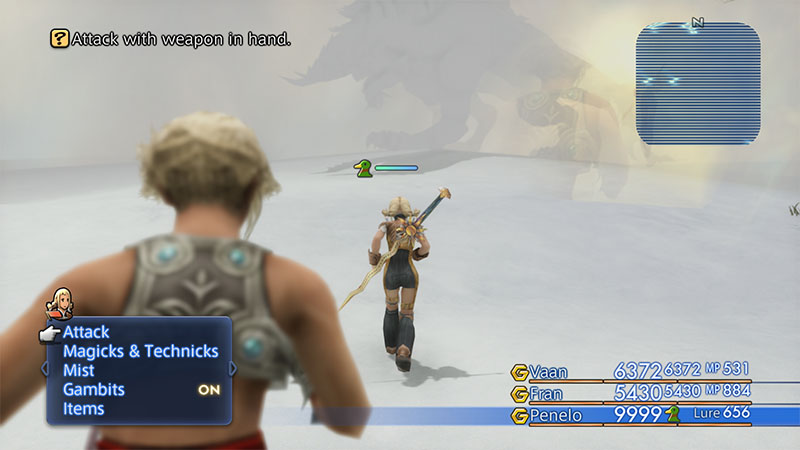
The main benefit of gambits is that they allow you to have a large amount of low-importance combat encounters without expending mental effort in proportion. Once you set up your gambits, they will operate for an unlimited number of encounters under similar conditions.
This is not something that is easily replicated on the table top.
In most TTRPGs, combat slows the game to a crawl: taking turns six seconds at a time. Many tables only manage one encounter per session, and some don’t even manage that. While there are games that can breeze through a handful of encounters, it is rare that they approach the amount of fights in Final Fantasy XII — where you could run into 30 enemies just walking across one zone. Recreating the gambit mechanic does not speed things up, as the physical act of playing through a combat takes a long time to process. Everything from initiative to an individual attack might require a roll and value check, even if you are relying on pre-set strategy.
The solution is to design a system that reproduces the effect of the gambit system rather than its methods. Unimportant combat encounters are abstracted down to a single roll. Each fight can be considered an equation balancing random variables with resource expenditures. Mechanically speaking, this would operate on blackjack principles: the gambit is a wager of party resources (spell slots, consumables, per-encounter abilities, etc) against a randomly determined opposing force.
If your wager exceeds what is required by a fight, those resources are lost. On the other hand, if your wager fails to cover the needs of battle, then your loss is that much greater. Depending on how forgiving your tastes are, this could simply be a multiplier for resources lost or alternatively, the loss of resources that are more difficult to recover. In the former instance, this would be like losing double the HP that in-combat curatives would have otherwise saved. The latter scenario is something like long-term injuries & scars or levels of exhaustion.
hunts
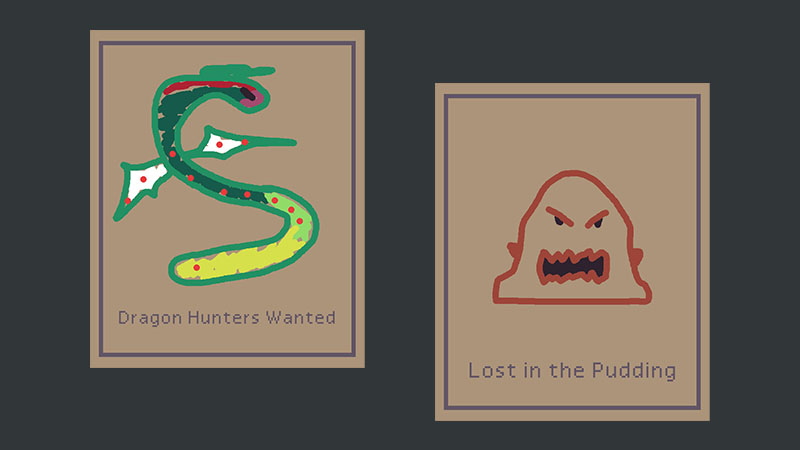
Early on in the game, you are tasked with hunting a Rogue Tomato that’s been attacking traveling merchants. This is the only hunt that is required by the main story, but it serves to introduce you to the main format of side quests in Final Fantasy XII. Vaan is advised to seek out Clan Centurio if he wishes to advance his hunting career. Clan Centurio is a group dedicated to hunting elite marks — unique boss monsters. Various clients will come to the clan with hunt requests, and Centurio hunters accept these requests on an individual basis.
This is a framework that I’ve already employed in my Fabula Ultima game. I’ve always liked quest boards as a diegetic way to present choice to players while tying chunks of prep to in-game factions and worldbuilding. The key advantages of the hunt system are very subtle:
First, each hunt is about a unique monster. These are not World of Warcraft quests to go out and slay 13 skeletons and come back with their bones. Each quest is about a specific, named monster. The vast majority of requests are about monsters that are an active danger to the local community. (There are a couple of requests to slay ancient evils that have been sealed away.)
Second, each hunt is requested by a specific, named individual. Every time you accept a hunt, you are required to go track down the client wherever they may be and get the full details from them. In Final Fantasy XII, this is where over half of the side story lies — getting to know people and helping them with a problem.
The payout from hunts is not particularly large, but your reputation in Clan Centurio grants access to an exclusive provisioner that sells rare accessories and green magick spells. This aspect is something I have also brought to my Fabula game, where my own “Millennium Hunt Club” offers a special vendor whose offerings increase as the players do more hunts.
loot & the bazaar
The final major mechanic for Final Fantasy XII is the loot system. Each monster has a base chance of dropping items when defeated. However, this is not the chance to drop a specific item. Let’s do a case study on a Gargoyle enemy:
- 40% – Demon Eyeball
- 25% – Storm Magicite
- 5% – Gilt Measure
- 1% – Hi-Potion
These are the drop chances for items on a fresh encounter with a Gargoyle. Each item is rolled independently of the others. Furthermore, if you slay multiple Gargoyles in a row (building up a Chain), the drop chances increase:
- 55% – Demon Eyeball
- 40% – Storm Magicite
- 18% – Gilt Measure
- 7% – Hi-Potion
There are also special key items you can acquire which increase the default loot pool of enemies. Various monographs represent knowledge gained from professions to hunt specific families of enemies. The Sage monograph adds a potential item to the pool dropped by elementals, while the Hunter monograph adds one to drops from avions and beasts. A Canopic Jar is an item that allows enemies to start dropping arcana loot (don’t worry about what that is). The main thing to understand is that the loot pool expands through these permanent upgrades so that by the end of the game, you have six rolls for possible items per monster defeated.
This makes Final Fantasy XII a game filled with loot items:
- Adamantite
- Bat Fang
- Blood Wool
- Bomb Shell
- Bundle of Feathers
- Chimera Head
- Crooked Fang
- Dark Crystal
- Dark Magicite
- Dark Stone
- Demon Eyeball
- Demon Feather
… - Wind Stone
- Wrath of the Gods
- Wyrm Bone
- Wyvern Fang
- Zombie Powder
You might be asking, “What does all of this junk even do?”. It’s a fair question. While some items are directly useful (such as Hi-Potions and the Gilt Measure — a weapon), everything categorized as “loot” is useless by itself. Loot exists to be sold. This is the primary method for making money in Final Fantasy XII. Sidequests rarely pay half as well as the payout from selling the item drops you got on your way to the destination. If that was the only purpose of loot, I would call it bloat and recommend cutting out the middleman and having enemies drop money directly.
The mechanic that saves this extremely diegetic way to reward players is the bazaar. The very best items in the game cannot be purchased from shops. They become available through the black market bazaar after you sell specific combinations of loot. You can think of the bazaar as a kind of crafting system: selling 2x Dark Stone, 1x Tanned Hide, and 2x Wolf Pelts will make “Assorted Leathers” available for purchase on the bazaar. Buying this item for 300 Gil gives you a Leather Breastplate and Leather Headgear. Some transactions are repeatable, but the majority of these are one-time purchases.
I’ll be honest: I think the implementation of the bazaar in Final Fantasy XII falls a little flat. The juice usually isn’t worth the squeeze, and the main interaction of loot is selling enough to stay profitable while keeping enough items that if you need to craft later, you’ll have a supply. It turns into a spreadsheet game, and while I’m a sicko, I know it’s not everyone’s cup of tea.
What I like about the loot and bazaar system is the way it keeps everything diegetic while still rewarding players for dealing with all of the battles across their journey. Each of the systems that I’ve examined work in tandem to support the core game loop: the resources being expended in gambit wagers are replenished by consistent rewards, and the small battles serve to contrast the big set-piece hunts.
If I were to translate the bazaar to the table top, I would try and find a way to reduce the rigidity of the system. As it is, many ingredients are only used in a single recipe and the rest are only used in 2-5. My own crafting system solves this problem by allowing players to reduce materials to a small set of elements which can then be combined in various amounts. The other important thing is to make recipes player facing; Final Fantasy XII presents no way to learn bazaar recipes except through experimentation and vague hints at important materials.
I spent over 170 hours in Final Fantasy XII. I laughed, I cried, I fell into despair and picked myself up again. This game is not very popular among Final Fantasy fans, and a large part of that is because of how experimental it is. The game takes big swings at ideas that don’t always work out. Gambits are unlike anything in other Final Fantasies, and the writing is much more political than personal. It is unafraid to be something totally unique, and that’s why its design is so inspirational to me.