ttrpg theory

the lost manifesto: optimizer culture

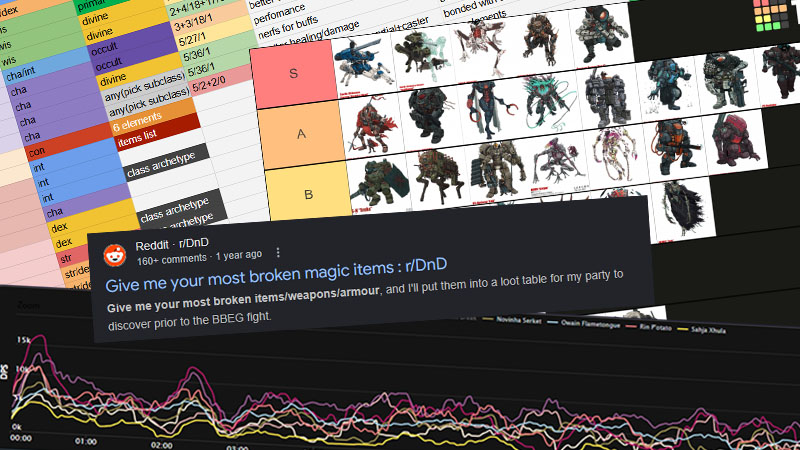
a collage of optimizer culture

In 2025, I wrote a post called “alternative game fantasy: a manifesto“. It was my best attempt at expressing dissatisfaction with the six cultures of play, specifically because I feel left out of the cultures described. Since then, I have written many more posts, played and reviewed many more games, and had a singularly enlightening the lost manifesto: optimizer culture

anti-blorb principles

I hang out with a lot of OSR folks. It’s where I’ve found community, and it’s where I perceive the most discussion happening in the ttrpg space. The blogging culture is thriving and it feels like people are talking with each other rather than posting to an audience. Unfortunately, despite the excellent work Elmcat is anti-blorb principles

quantum ogre reborn

It’s time we re-examine what we mean when we use the term “quantum ogre”. The seed of this post started when Valeria posted her review of Fabula Ultima and quoted Emanuele Galletto (the game’s author) using the term to describe the game’s playstyle. If I had been vaguely aware of the term beforehand, that post quantum ogre reborn

weakness break mechanics: a case study

In the absence of position-based tactics, singleplayer turn-based RPGs have converged upon some similar mechanics. I want to look at how this works through a few case studies and talk about what it would look like for ttrpgs to adopt this design pattern. Rather than try to talk around this in the abstract, it’s easier weakness break mechanics: a case study

warframe & tabletop game design

The annual convention for Warframe, TennoCon, happened this past weekend. For those unfamiliar with the video game, it’s a space ninja looter-shooter with uncharacteristically benign monetization. Unlike other free-to-play games, Warframe ensures that all players can earn premium currency and has even removed microtransactions when players were using them too much. Between the lore and warframe & tabletop game design