I need to be less of a tourist when it comes to Japanese roleplaying games. I exist downstream from decades of culture and art that exists in conversation with itself, and I thoroughly enjoy the byproduct — whether that’s anime influences or modern games. However, it becomes embarrassing to have such enthusiasm for this genre without the experience in its roots. I’m running a Fabula Ultima campaign directly inspired by Japanese roleplaying games, and I’ve decided to dive into the history of the genre to better support the art I’m making.
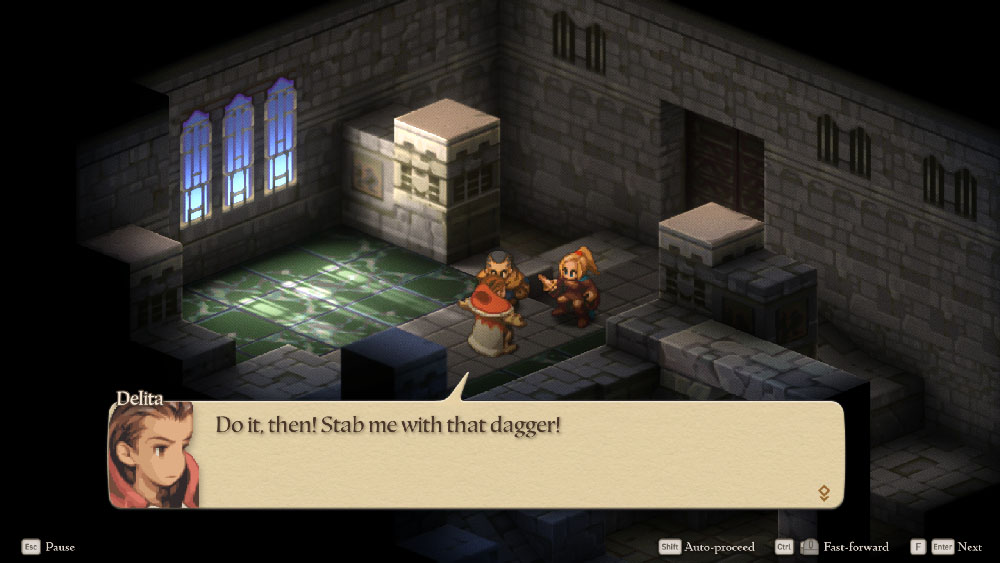
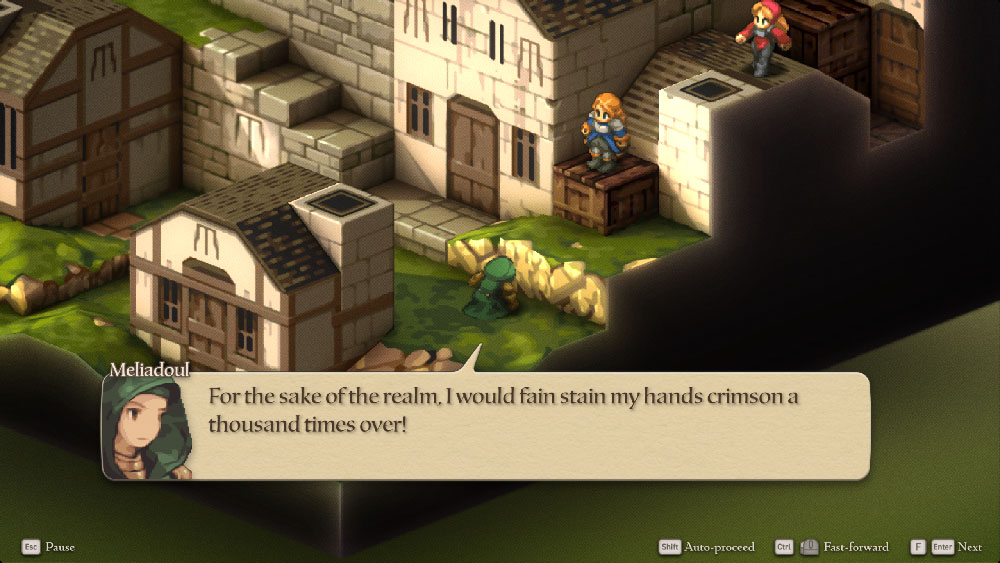
Final Fantasy Tactics (FFT) is one of the paragons of JRPGs, launching a number of spinoff tactics games and eventually a mainline title — Final Fantasy XII — set in the same world as FFT. While most Final Fantasy games are known for being standalone experiences, a small number have spawned sequels. Even among such cases, the world of Ivalice stands out as an influential setting, being the subject of a company initiative to create games in the same world. Before we start unpacking the mechanics of the game, I want to acknowledge its incredible writing. The story of FFT could stand on its own without any of the game, and I would still enjoy watching or reading it. It’s a moving tale of knights and honor and the struggle between commoners and nobility. The characters feel iconic and genuine in a way that’s refreshing. With that said, let’s unpack the mechanics at work — and why they would thrive in a tabletop roleplaying game.
party vs. party
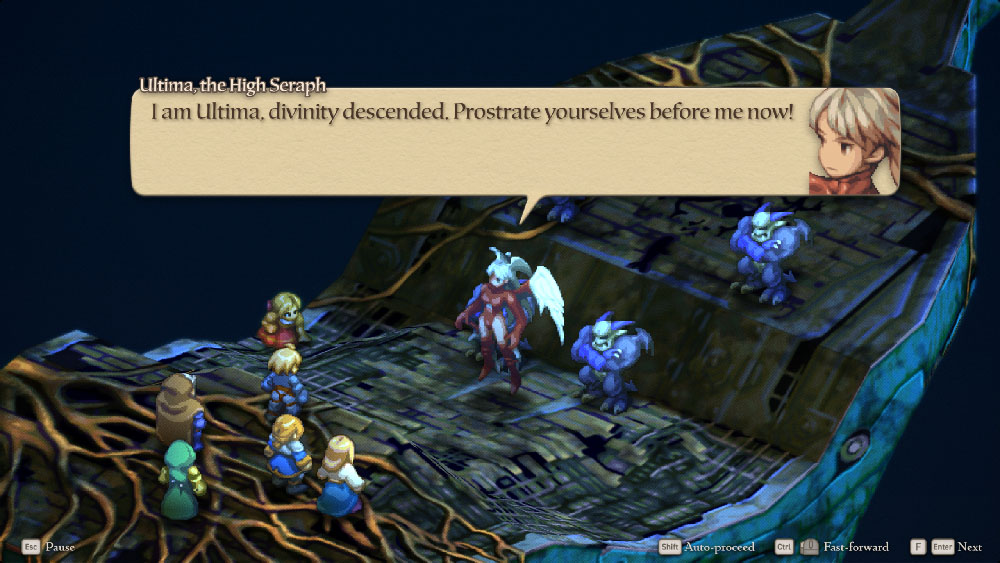
When I started playing Final Fantasy Tactics, I expected the game to involve commanding large forces against waves of enemies. What I found was that you never have control over more than 5 characters and the enemy force will be roughly equal in size (or at least, action economy). This makes the battles of FFT much more similar to tabletop roleplaying combat than other turn-based strategy games. The math might get a little intense, but you can “run” FFT on a dry erase grid with some markers and tokens. Alternatively, you can take the combat encounters of FFT and run them in any system you desire with varying degrees of translation work. This is one of the things that got me started thinking about a tabletop understanding of Final Fantasy Tactics.
character breakdown
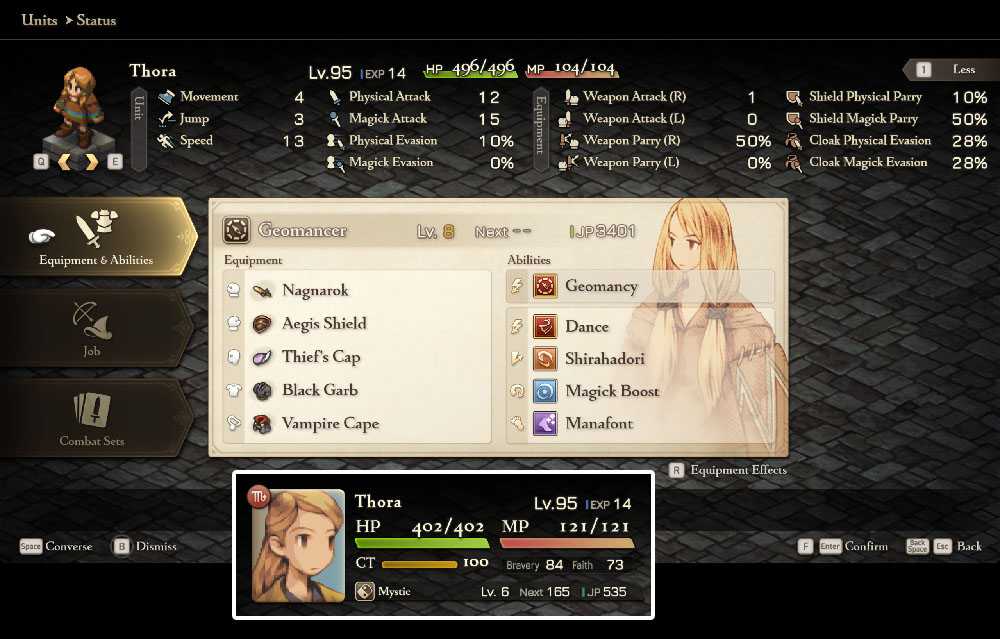
This looks like a lot. Stay with me.
Ignore the numbers at the top for a moment. Look at the box in the center. A character, fundamentally, is made up of 5 equipment choices and 5 ability choices.
The character’s first ability is defined by their Job. The job also determines what type of gear they can equip and the multipliers for their stats. For example, let’s imagine a jobless character with 3 physical attack and 4 magick attack. If we make this character into a knight, their physical attack is multiplied and becomes a 9, while their magick attack remains a 4. They gain access to swords and heavy armor, and may learn abilities such as Rend Shield. If we later decide that the character should be a black mage, their physical attack drops back to its baseline and their magick attack is multiplied instead. Similarly, they will be unable to equip heavy armor or use any acquired knight abilities.
Right off the bat, we’re diverging from traditional ttrpg expectations with the idea that you can change your job or class like it’s a costume. I’m not really sure whether this is a common mechanic in JRPGs, but it’s certainly familiar to me as a Final Fantasy XIV player. Regardless, we’ll unpack the job system a little bit later.
When a character performs a successful action in battle — whether casting a spell or making an attack — they gain three things:
- Character EXP
- Job EXP
- Job Points (JP)
Characters gain levels up to 99, providing a small amount of stats across the board. Each individual job can be leveled from 1 to 8, which affects the amount of JP it earns but not much else. Job Points are the meta currency used to unlock abilities: i.e. it costs 150 Geomancer JP for a character to learn the Tanglevine ability.
Each job has a pool of abilities to learn, categorized into the following four types:
- Action
- Reaction
- Support
- Movement
Action abilities are the most straightforward. On your turn you can cast Flare and deal a bunch of fire damage to an enemy. Reaction abilities have a chance to occur when an enemy attacks you. Each ability will note the type of attack it reacts to — sometimes this might be “all physical attacks” or it could be limited to “enemy spells”. The effect is generally something defensive in nature, but can include counterattacks or gaining money equal to damage taken. Support abilities are passive in nature, but range between stat-increasing effects like Magic Boost to allowing a character to equip different gear or talk to animals. In my playthrough, I found this to be the most important slot for creating unique characters. The final action type is Movement: similar to Valiant Horizon, most classes have unique movement abilities. While many of these are movement styles like teleportation or flight, some have game-changing effects like the ability to recover resources for each square you move or find hidden treasure.
The genius of Final Fantasy Tactics is that any ability you learn can be used with any job.
As an example, you can make a character with the Black Mage job, which gives them access to Black Magicks by default, and equip them with White Magicks (from White Mage), Mana Shield (from Time Mage), Halve MP (from Summoner), and Manafont (from Mystic). That’s a 5-in-1 multiclass wizard capable of dishing out damage or healing while being decently tanky.
a note on equipment
Compared to the ability system, the five pieces of equipment are not particularly revolutionary. With that said, I do think five equipment slots is the perfect number of decisions to make about gear, especially with the roles that each slot embodies.
A weapon is your main interaction tool in combat. The offhand is interesting as a decision between augmenting your defense with a shield or focusing on damage with a two-handed weapon (or dual-wielding).
Fabula Ultima collapses armor into a single slot, but I think dividing it between head and body allows you to support more nuanced builds or create niche solutions like a hair ribbon that nullifies status effects. Many hybrid jobs enjoy having some heavy defense along with a high MP hat.
Accessories are your slot for problem solving. Defensive accessories like cloaks can turn a squishy character into an evasive ghost. Rings with the right status immunities can trivialize certain bosses, and if all else fails, damage boosting armlets feel great to use.
the job system
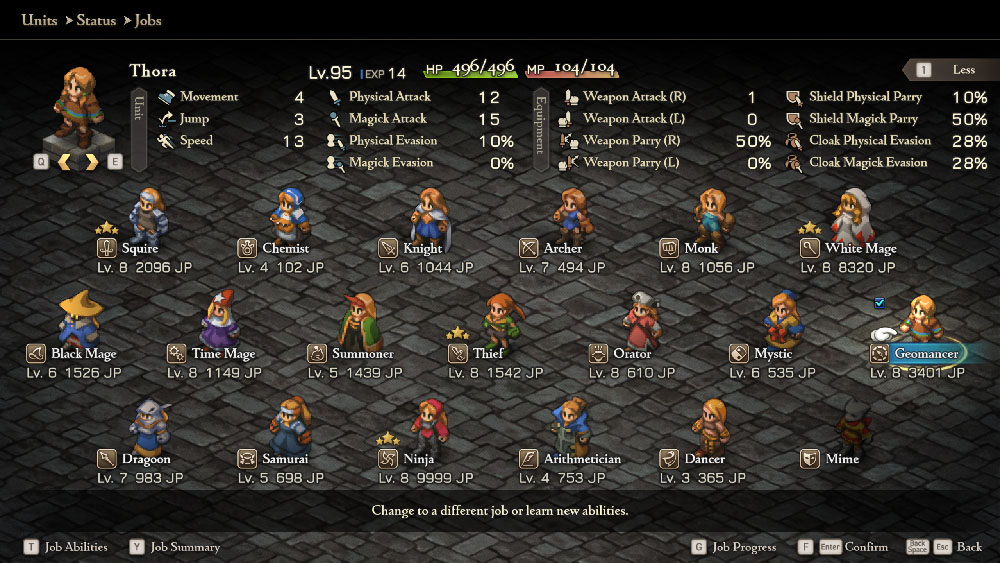
Job identity is a lie created by big gamer because someone was mad about a splatbook.
No but seriously. Look at this menu: you can learn every ability from every job on the same character. As a matter of fact, I *did* do that as part of my 100% achievement. What is a job but a miserable pile of secrets pool of abilities to unlock.
The designers of Final Fantasy Tactics are not particularly concerned with the fact that Black Mage and Summoner have a similar job “identity” as a high-damage spellcaster, because what they are doing and how they achieve it is very different. The Black Mage has four different levels of killing you with lightning, each with different costs, speeds, and damage. The Summoner has a single esper that deals lightning damage, with no control over its speed or area of effect. You can get further nuance from the fact that Black Mages have higher magick multipliers than Summoners, but slightly less MP. At the end of the day, every character trait is situational, and your personal preferences will decide what jobs you enjoy using rather than their role on the battlefield.
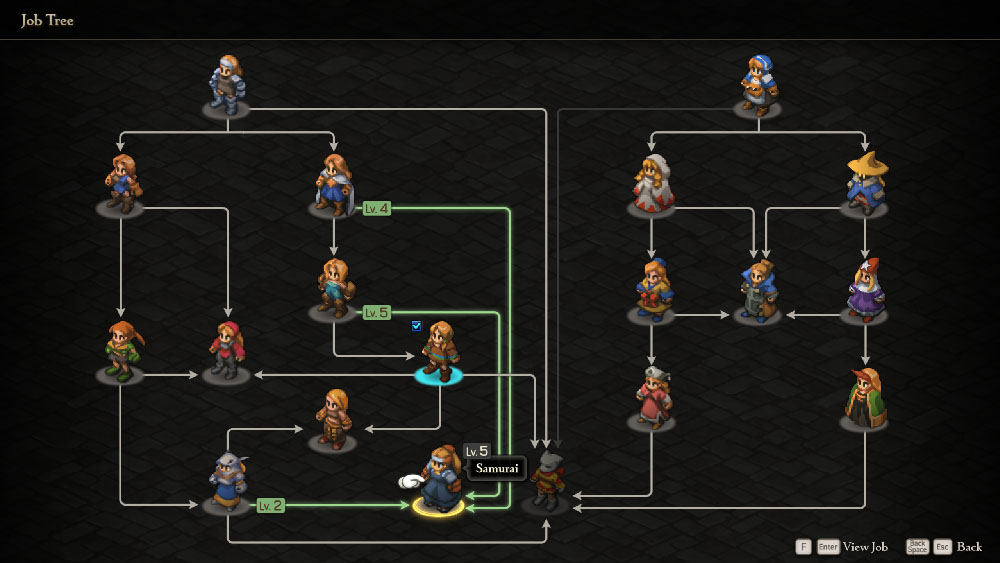
Every job is further organized into a prestige class system where you need to level certain jobs to unlock others. Tabletop gaming is no stranger to this concept: it’s existed for at least as long as Bards. The interesting thing is that the classes further down the tree are not necessarily more powerful than the ones higher up, and they usually have more niche applications or more complex mechanics.
The ultimate example here is the Knight job, which you can unlock after getting your second level in Squire. Despite being a very basic job, its physical attack multiplier is one of the highest in the entire game, and Knights remain important at the highest levels. It turns out that wearing heavy armor and swinging a sword is a pretty good solution to the church trying to kill you.
Let’s compare the Dragoon and Samurai, who are both on the martial side of the job tree with similarly high physical attack multipliers. While the Dragoon could try and stab you with a polearm, the advantage of being a Dragoon is that you can leap into the air (avoiding all attacks) and come crashing down on enemies at range. Every jump is a calculation based on your speed and the target’s speed to try and gauge whether you will land before they move. If you succeed, you deal far more damage than a simple stab, but the attack is much slower. The Samurai on the other hand can also walk up and attack with their katana, but why would you ever do that when you can use a magical Iaido attack which automatically hits enemies in an area around you and avoids damaging allies. It doesn’t even use MP!
Each of these more advanced classes sacrifices something in order to deal damage in their unique way. First: the Knight gets to use a shield by default, making it much tankier than the other two. Second: the Knight’s action skill destroys enemy equipment. Because its main damage comes from a basic attack, it’s free to allocate its skill for utility. In comparison, both the Dragoon and Samurai are only good at dealing damage.
this game could have been a ttrpg
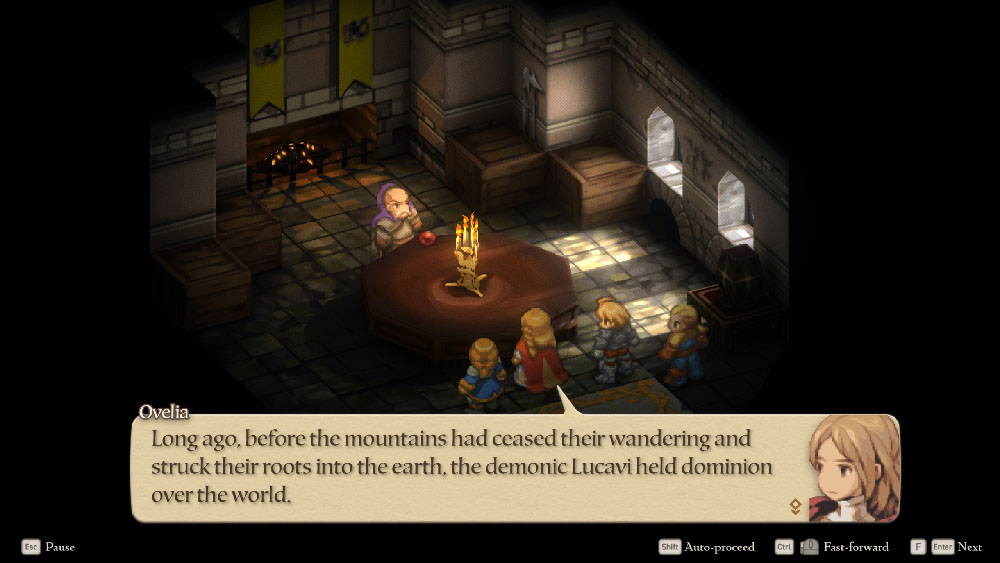
The core mechanics at play are so simple you can run the game on dice. Attacks have a percent chance to hit, and do a determinable amount of damage. Characters have individual initiatives (similar to a Shot Clock as described by Dwiz) and take turns moving and doing an action. You’d have to trim the fat and organize things for tabletop play, but nothing in the combat encounters is beyond what you’d see in any elfgame.
So.
What lessons are we actually taking from this game, as designers and players?
> No random stats; just class and gear
It’s easy to miss what this game doesn’t have unless you’re specifically comparing it against ttrpgs, like the presence of negative space in a painting. While there is a certain amount of random stats assigned to the generated characters, the difference between any two units is completely negligible. Stats are instead determined by your job and gear. This just feels better than a single roll during character creation predetermine your character’s aptitudes.
> Classes as pools of abilities
This is another way of saying that it’s 2026 and we should be free from the shackles of discrete classes. Mix and match whatever abilities to create the character in your heart. The class as a group of abilities exists to inform players what works well together and forms an archetype, but it shouldn’t restrict players.
> De-couple character level from classes
If we’re grabbing abilities from different archetypes, then a character’s level shouldn’t be tied to a class or their sum. It should be a global measurement of power — and frankly, we only need that so GM’s can do encounter balancing. Neither the player nor their character need to chase that number. In fact, you can make character level a more accurate measurement by calculating it based on individual ability strength and free yourself from trying to make all options balanced.
Wait. I’ve just re-invented GURPS.
> Don’t implement job swapping
Unlike my other points, this is an anti-lesson: allowing player characters to freely swap jobs will make your game feel unrealistic and kill immersion. If you aren’t designing a realistic game, that’s fine, but even I would hesitate to add this to my game. As a consequence, this makes complicated prestige job trees a more difficult pitch. Even if the GM is pretty flexible about allowing changes if something isn’t working out, I would still err on the conservative side and limit the amount of pre-requisite jobs for your most advanced class.
> Incentivize playing the game
I was talking with Onslaught Six of Tidal Wave Games the other day about Draw Steel and how it rewards players for stretching out a day by ramping up their resources and power for each successive encounter. I think it’s genius design! The game should reward us for playing the game we enjoy playing. This is one of the issues I have with combat as a fail state: I like combat and I don’t want to be punished for interacting with those mechanics.
Final Fantasy Tactics rewards you for every successful action with experience. A direct implementation of this would be a huge headache for many systems, but I can’t help but think of slower-paced storygames that reward XP on failure. If your rate of action is slow enough, I think you can reward players for individual successes.
> If it ain’t broke, don’t fix (your combat encounters)
There are no particularly complex combat encounters in Final Fantasy Tactics. With maybe one exception, there are no gimmick fights that force you to adopt a new strategy. Despite this, I was never bored by any of the combat.
I think encounter designers feel like they have to constantly top themselves by coming up with a crazier set piece than the last big battle. This game showed me that sometimes, combat is engaging just by nature of circumstance. The battle to infiltrate a fortress and rescue Count Orlandeau didn’t have any tricks, but I was excited because the story of a daring raid was engaging.